\
&
Contact us
\
&
Contact us
\
&
Contact us
\
&
Contact us
The administrative and financial framework with rules for application and project implementation of Horizon 2020 call are set-out in the Grant Agreement; the Annotated Model Grant Agreement explains extensively all details.
The European commission gives on a regular basis trainings with background information on coordinators' days, that can be followed live or through webstreaming. Presentations can be consulted in the documents in below.
Information on specific legal and financial topics are listed and documented in the documents in below.
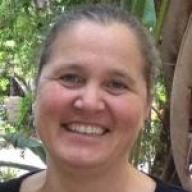
ann.vanhauwaert@fwo.be
+32 2 550 15 60
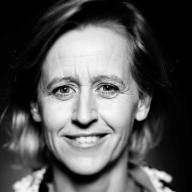
Ria.debreucker@vlaio.be
+32 2 553 13 77
Find the contact info on the site of WEWIS
The National Contact Points (NCPs) provide support, guidance, and practical information to potential applicants, helping them navigate funding opportunities and application processes.
The Programme Committee (PC) members represent their country in decision-making about the work programmes, evaluate implementation, and provide strategic input on priorities and calls.
Infosheets contain edited content on aspects related to this programme. They are reviewed at least yearly.
Related links are easy pointers towards external information. We curate the list, but are not liable for the destinations.
Documents contain additional information related to this programme, and are similar to related links.
Funded under Horizon Europe (HORIZON-CL5-2022-D5-01-02), running from 2023 to 2026, AENEAS advanced the development of innovative electric energy storage solutions tailored for waterborne transport. The project has also created tools & platforms to support the optimal integration of new energy storage systems into vessels, assess their impact on overall system efficiency, and quantify potential reductions in greenhouse gas emissions. The project consortium, led by Flanders Make, consists of 14 partners from 8 countries. Read more about the project in this testimonial.