\
&
Contact us
\
&
Contact us
\
&
Contact us
\
&
Contact us
Starts in 5 days from now
LocationHybrid: Stockholm (SE) and online
The workshop "Getting Started with AI on LUMI," aims to assist participants in transitioning from smaller-scale computing environments to LUMI's robust GPU platform. Attendees are encouraged to bring their own AI training scripts, giving them personalised support to run on LUMI.
The workshop will cover:
Online participation is limited to the lectures. Interactive sessions will be exclusive to in-person participants.
Registration is open until 2 October 2025, at 12:00 CEST. There are 30 in-person spots available on a first-come, first-served basis.
Target audience: researchers, innovators, developers. T
For more information and to register for the workshop, please visit the event website.
We offer news and event updates, covering all domains and topics of Horizon Europe, Digital Europe & EDF (and occasionally, for ongoing projects, Horizon 2020).
Stay informed about what matters to you.
By signing up, you can opt in for e-mail notifications and get access to
a personalised dashboard that groups all news updates and event announcements in your domain(s).
Only for stakeholders located in Flanders
Security Cybersecurity Defence EDF NATO-EDA
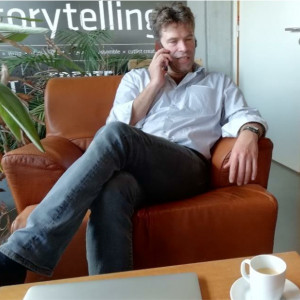
If you’ve never heard of Limecraft, you’re clearly not working in the media sector. Their SaaS platform provides integrated workflows for media management, scripted and unscripted TV, and subtitling and localisation. It is used by leading broadcasting companies – such as BBC, VRT, NPO… – and production firms of which De Mensen or Hotel Hungaria might ring a bell (at least if you are Belgian).
NCP Flanders went to Ghent to interview Maarten Verwaest, CEO and cofounder, about how he sees Horizon 2020. Limecraft is a partner in the MeMAD project, which is a collaborative RIA project submitted to an ICT call topic.