Partnerships

Driving Urban Transitions (DUT)

Driving Urban Transitions (DUT)

Partnership website: https://dutpartnership.eu/
The Driving Urban Transitions (DUT) Partnership addresses the challenges European cities face regarding the transition to a sustainable urban future. The DUT Partnership also contributes substantially to the Horizon Europe Missions: Climate-neutral and Smart Cities and Mission Adaptation to Climate Change, the European Green Deal, and the Urban Agenda for the EU.

The Driving Urban Transitions is an co-funded partnership, bringing together private and public stakeholders in the research and innovation ecosystems. The DUT partnership incorporates all urban stakeholders (local authorities, municipalities, business and citizens) to co-create innovative, systemic and people-centric approaches, tools, methods and services in support of urban transformative transitions.

CET Partnership aims to achieve this through annual calls addressing three transition pathways, further divided in three themes:

  • Circular Urban Economies (CUE)
    • Adaptive reuse of existing urban structures and spaces
    • Innovative maintenance of urban green and blue spaces
    • Rethinking urban production for circular and resilient cities
  • Positive Energy Districts (PED)
    • Adaptive reuse of existing urban structures and spaces
    • PED solutions in private housing across different urban contexts
    • Sustainable PEDs, flexibility in energy systems, and integrated technologies
  • 15-Minute City (15mC)
    • Cross-cutting topic: Adaptive reuse of existing urban structures and spaces
    • Align ambitions for mobility transitions across sectors
    • Nurture neighbourhood economies – activate innovation in local everyday offers

A co-funded partnership: participation in Flanders

There are two active Flemish participating members in the DUT call: Flanders Innovation & Entrepreneurship (VLAIO) and the Fund for Scientific Research (FWO). 

VLAIO

For consortia applying through VLAIO, more information can be found on the official webpage. Applications can include a research project, a development project or a PILBO application.

PILBO has various requirements and funding characteristics:

  • In case a Flemish local government wishes to apply, at least one Flemish company has to be part of the consortium
  • no more than 70% of the project budget can go to one partner

It is highly advised to contact VLAIO to ensure project funding eligibility (see contact details below).

FWO

For consortia applying through FWO, more information can be found on the official webpage. Applications can include fundamental research ("FO") and strategic basic research ("SBO").

A project coordinator can only apply for one DUT project as coordinator. Project applicants can only join a maximum of two different DUT projects/consortia.

It is highly advised to contact FWO to ensure project funding eligibility (see contact details below).

Key documents

Contact

What are partnerships?

Partnerships group the EC and private and/or public partners, to coordinate and streamline the research & innovation initiatives and funding in some selected key domains.
How to use partnerships?

  • orientation
    Partnerships publish strategic documents, e.g. outlining the main research and innovation challenges or key focus points.
  • networking
    Partnerships often organise events, such as info days, brokerage events, etc. Meet potential partners and learn about the nuances that are not visible in the official documents.
  • ecosystem analysis
    Partnerships typically have an advisory board, and publish impact studies of previous actions. These are good sources of information to uncover the main R&D&I players in the domain.
  • steering the agenda
    Partnerships collaborate with the EC on outlining the strategy and the future funding opportunities in their domain, based on input from industry, academia, and other stakeholders.
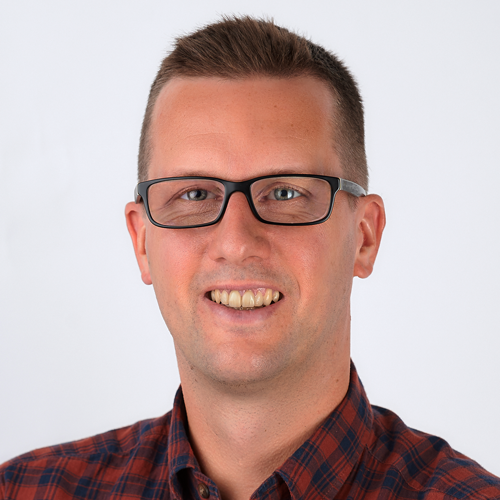
Author Do you have an additional question? Or spotted a mistake? Don't hesitate to contact me!
Image of Pascal Verheye
Pascal Verheye

pascal.verheye@vlaio.be

Testimonial

image of ANERIS - Next generation tools for sensing and monitoring marine-life

ANERIS - Next generation tools for sensing and monitoring marine-life

Funded under Horizon Europe (HORIZON-INFRA-2022-TECH-01) and running from 2023 to 2026, the ANERIS project aims to tackle the rapid loss of ocean biodiversity. The project’s main objective is to develop, test and implement the next generation of scientific instrumentation tools and methods for sensing and monitoring marine-life. Another key concept of the project is the introduction of the concept of Operational Marine Biology (OMB) as a biodiversity information system. The project consortium consists of 25 partners from 13 countries. Read more about the project and the contribution of Flemish partner VLIZ in this testimonial.